Hayes Valley Art Works · 20′ container gallery

Parameters

Parameters explores the mind-body connection through digital imagery and material processes. Selected works form both a retrospective of the artist’s digital past and glimpses of an uncertain future of physical form through automation.

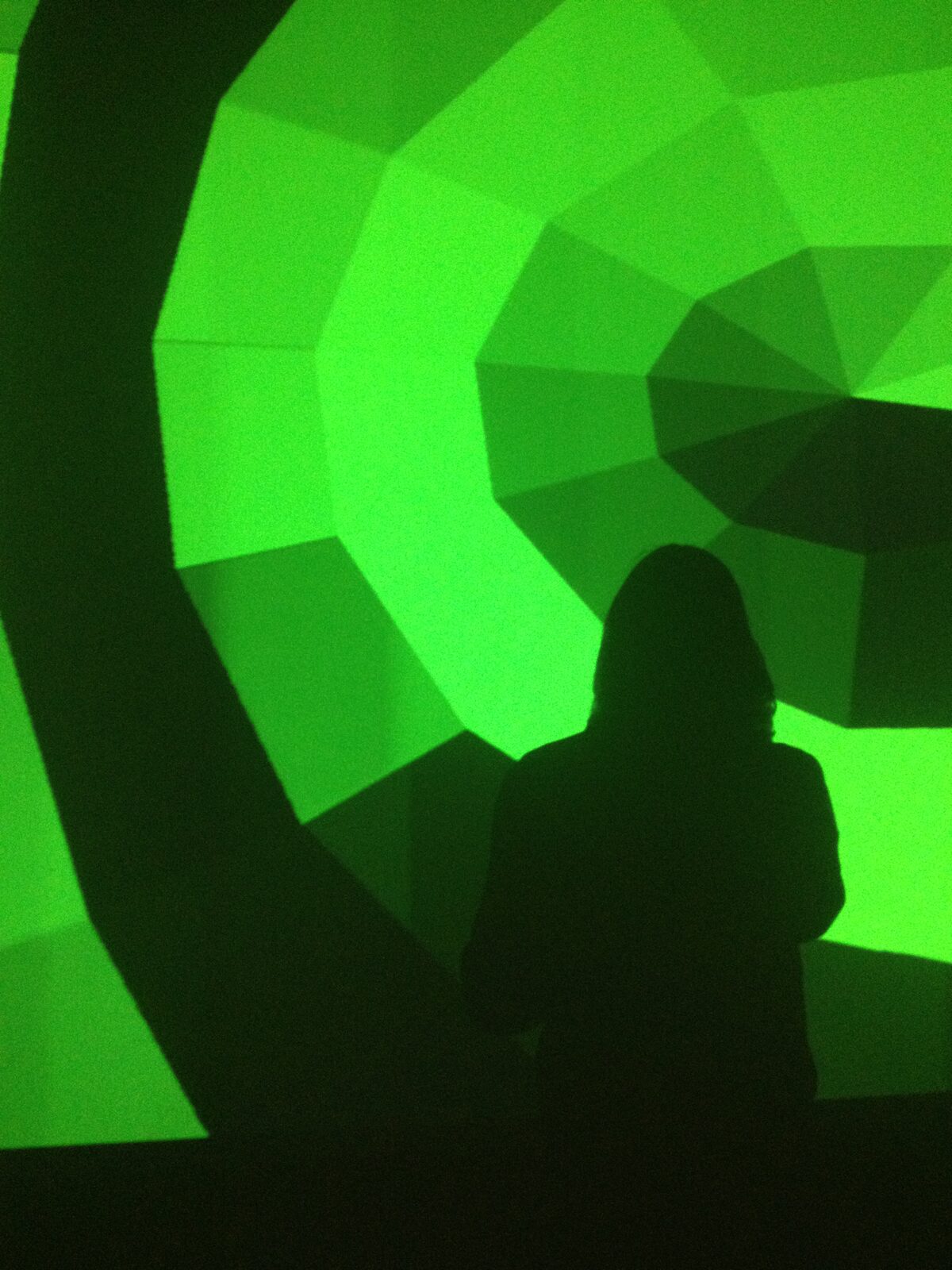
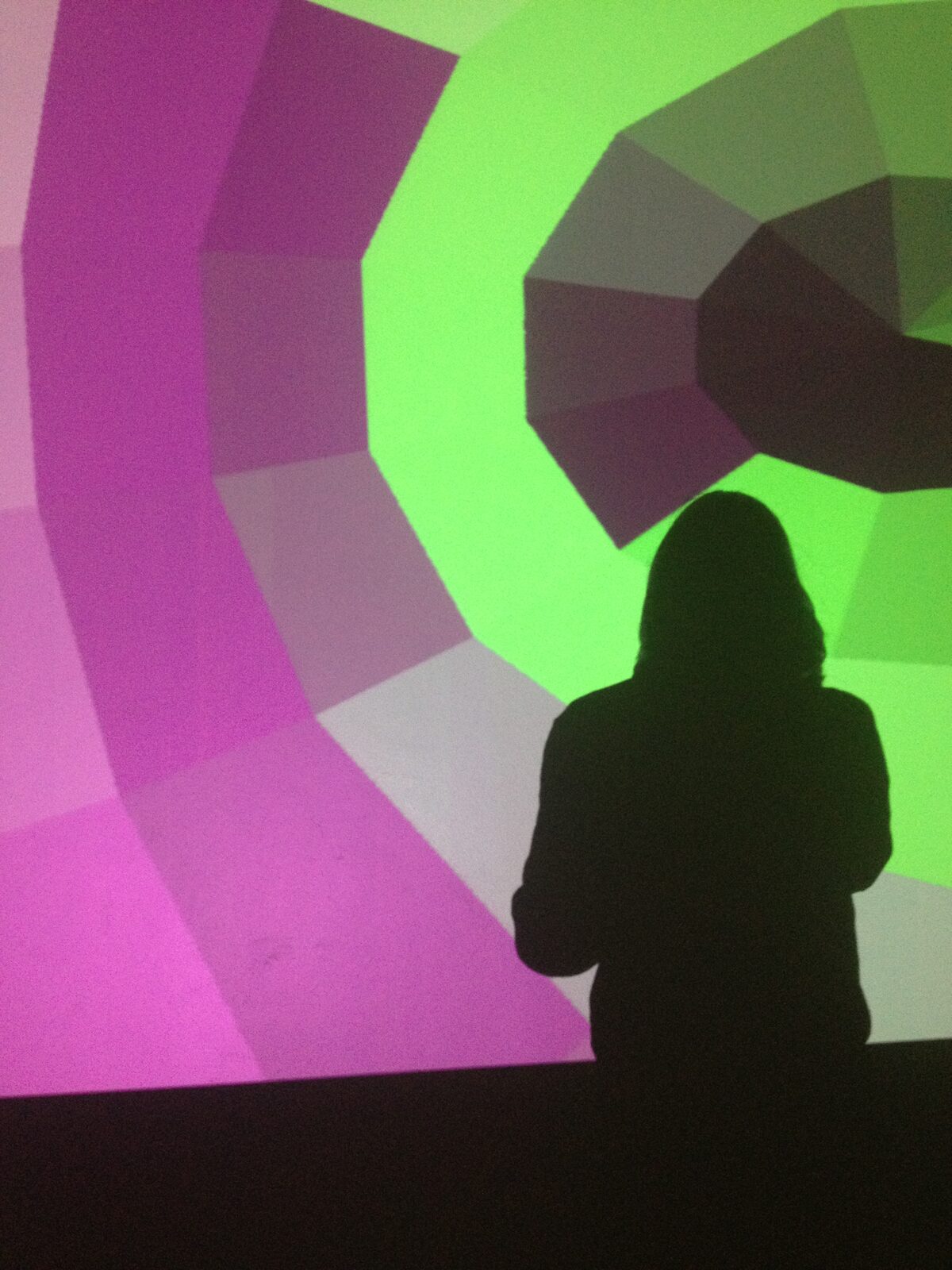
A person silhouetted inside a large magenta and green faceted projection on a wall
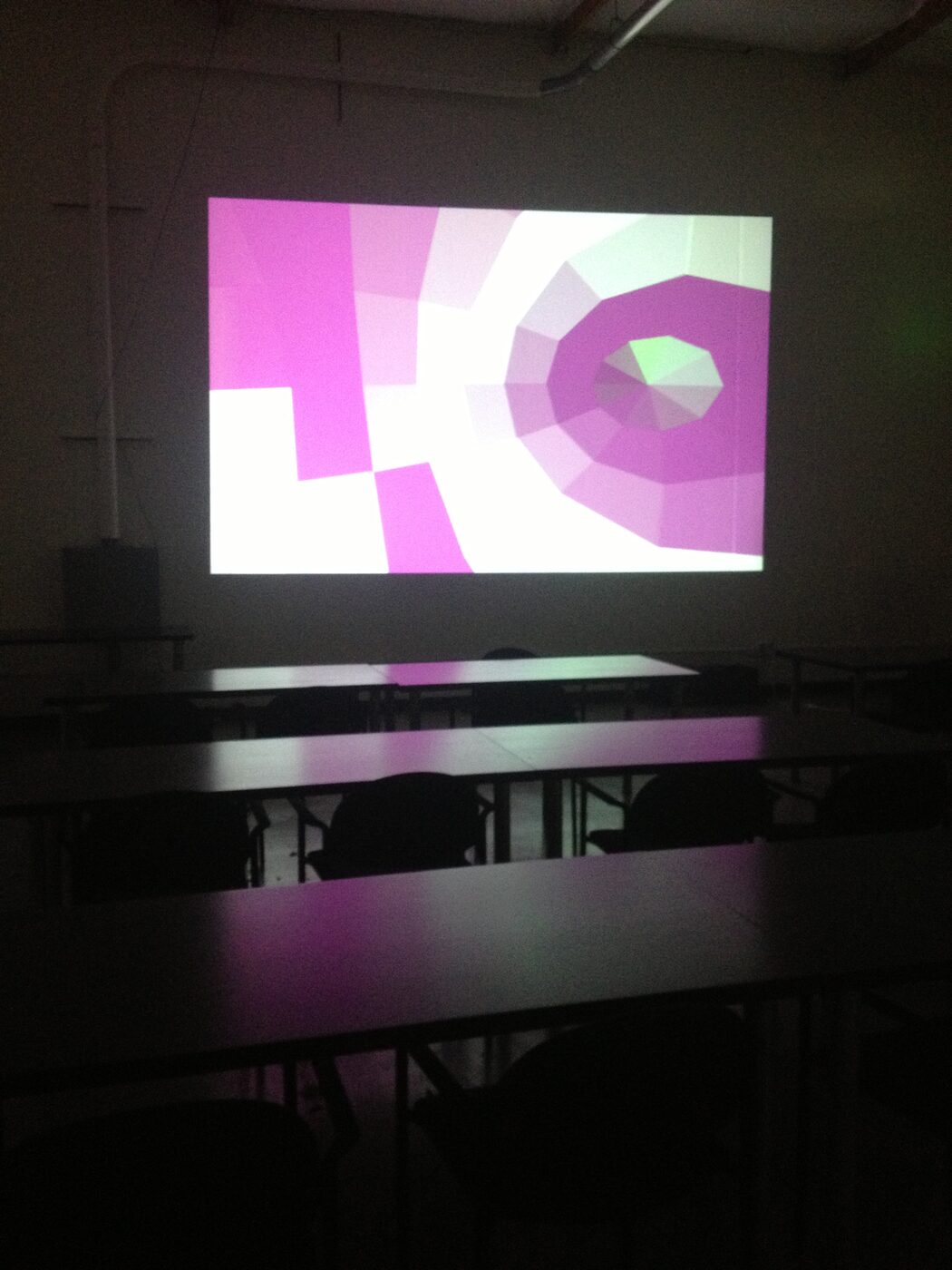
blitbomb, March 2013 — Pure Data / GEM, twin projectors, Hacker Dojo. Recovered for this show from a backup of a laptop that has been dead for years.
Dates

To be confirmed

Hours

4 hours daily, attended

Where

Hayes Valley Art Works

Admission

Free

Statement — draft

Everything here was made by writing down rules and then looking at what came out.

I have been making pictures out of algorithms since about 2012. For most of that time it was slow and physical work. You patched it by hand, you aimed two secondhand projectors at a wall, and you waited for the render. The 2013 piece at the top of this page took a room, a night, and a lot of cables to see once.

This show puts that work next to what I make now. The honest headline is that in the last year I finished more pieces than in the previous thirteen combined. I did not get thirteen times better. Something else changed, and this show is me looking straight at it rather than around it.

A parameter is a number that decides something on your behalf.

The title means both halves of that. Inside a model, the parameters are the weights — the numbers that settle what it will say before you ask. In a workshop, your parameters are the things you cannot argue with: what the material will take, what the battery will hold, how wide the container is. Both kinds decide things about you.

What makes this feel urgent rather than merely interesting is that the vocabulary has started running the other way. We built these systems by borrowing words for thinking — attention, memory, hallucination, reasoning — and now those words come back to us with machine meanings attached, and we use them on ourselves. The question is no longer whether a machine can be conscious. It is what happens to our account of our own minds once we have a working model that behaves like one.

There is a heart in this show rendered twice: once as a continuous surface of light, once reduced to seventy-eight flat triangles. Both are the same object. One of them is missing almost everything. Neither is the real one. I do not have a better way to say what I think is happening to us.
Mind / body / soul

The three walls are one loop, not three subjects.

A parameter in the abstract is a connection, a number that decides before anything exists. This is the mind. The moment it meets material it becomes visceral. The machine bends what it can rather than what is possible in the mind. This is the body. The gap between them is the work. What returns from that encounter is neither the rule nor the object — what survived compression of the physical, what the making taught. This is the soul. The next parameter begins again in the mind.

[/mind] The rule, before it costs anything

Weights, settings, the number that decides. Nothing has been spent yet and nothing has pushed back.

↓ is committed to material
[/body] The rule, meeting resistance

Steel, wire, current, heat. The machine executes the instruction and the material amends it.

↓ leaves a residue
[/soul] What survived the encounter

Neither the rule nor the object: what is left once both have been through each other.

↓ becomes the next parameters

The room is built to be walked this way. [/mind] and [/soul] face each other down the length of the container and [/body] closes the far end — so you walk in between the rule and its residue, arrive at the machine still running, and then turn around and walk back through the same two walls in the opposite order. The return trip is the point. Nothing here is a conclusion; it is a lap.

Structure

Three walls, and a machine that keeps working while you look at it.

The container is a corridor: nineteen feet long, seven feet eight across. You do not stand back from anything in here. Each wall pairs early work against recent work, so the comparison happens in the room rather than in the wall text.

[/mind]

The machinery of thinking

Backlit panels in plasma-cut steel, running on the hardware they are about. One of them is a live camera, so the wall ends by turning around and looking at you.

4 works
[/soul]

What survives compression

Prints on the wall, sculpture on plinths in front of it. The paired hearts stand here at matching height — one continuous, one faceted, neither containing the other.

7 works
[/body]

The thing that actually makes it

A CNC wire bender, running for the length of the show, with its output accumulating on a rack beside it. The only work here that is still making itself while you watch.

1 work, ongoing

Selected works

2013 and 2026, in the same room.

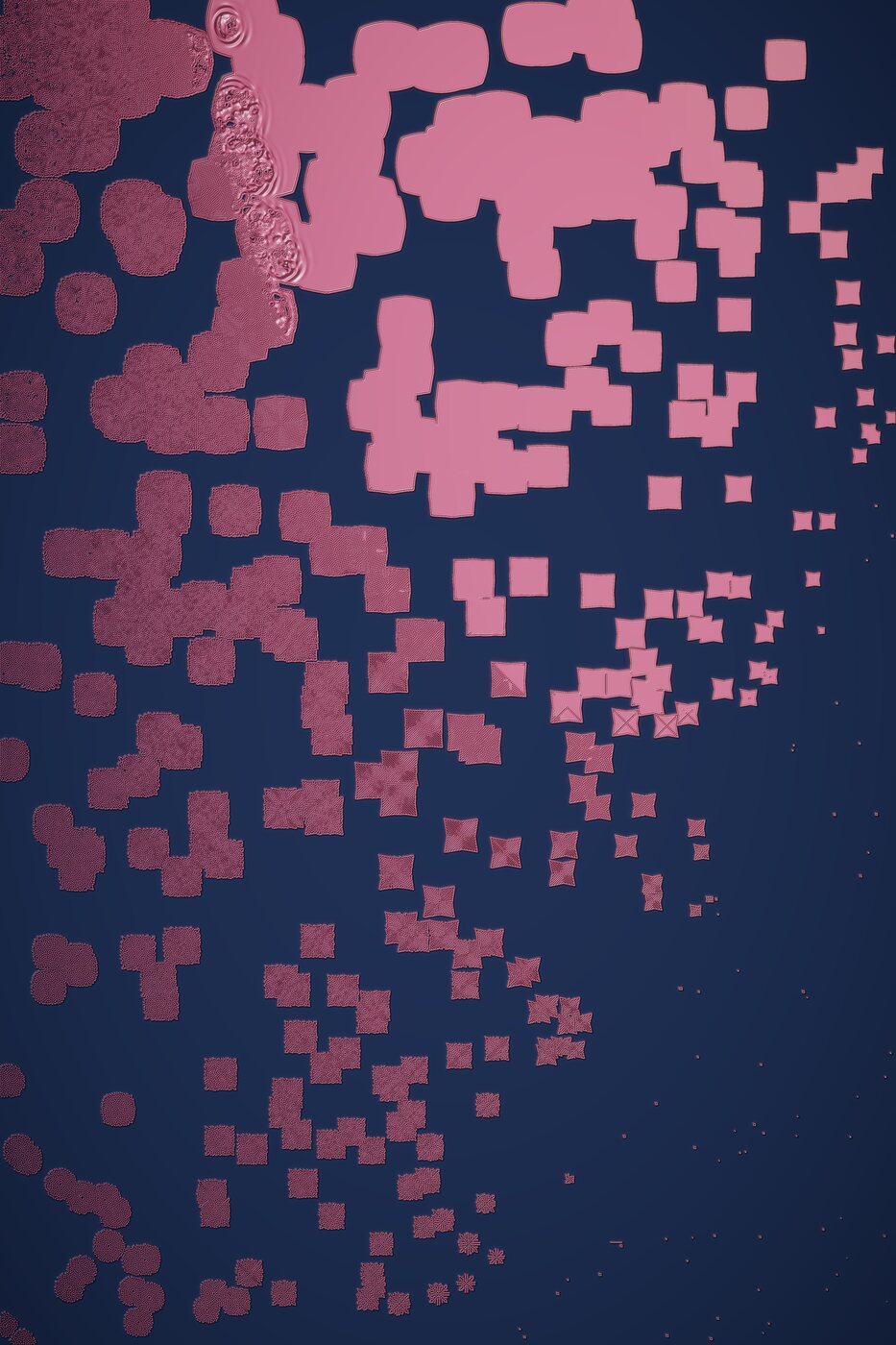
Reaction-diffusion print: pink and navy fields dissolving from dense maze patterns into open ground

Reaction 2026

Pigment print. Gray-Scott reaction-diffusion in which the feed and kill rates vary continuously across the sheet — one image sweeping an entire parameter space, with the transitions between regimes visible as bands.

A person silhouetted against a green faceted projection

blitbomb 2013

Live video performance, Pure Data / GEM. Ten scenes driven by hand from a game controller. Faceted, low-polygon, deliberately short of detail — the same appetite that produced the seventy-eight-triangle heart thirteen years later.

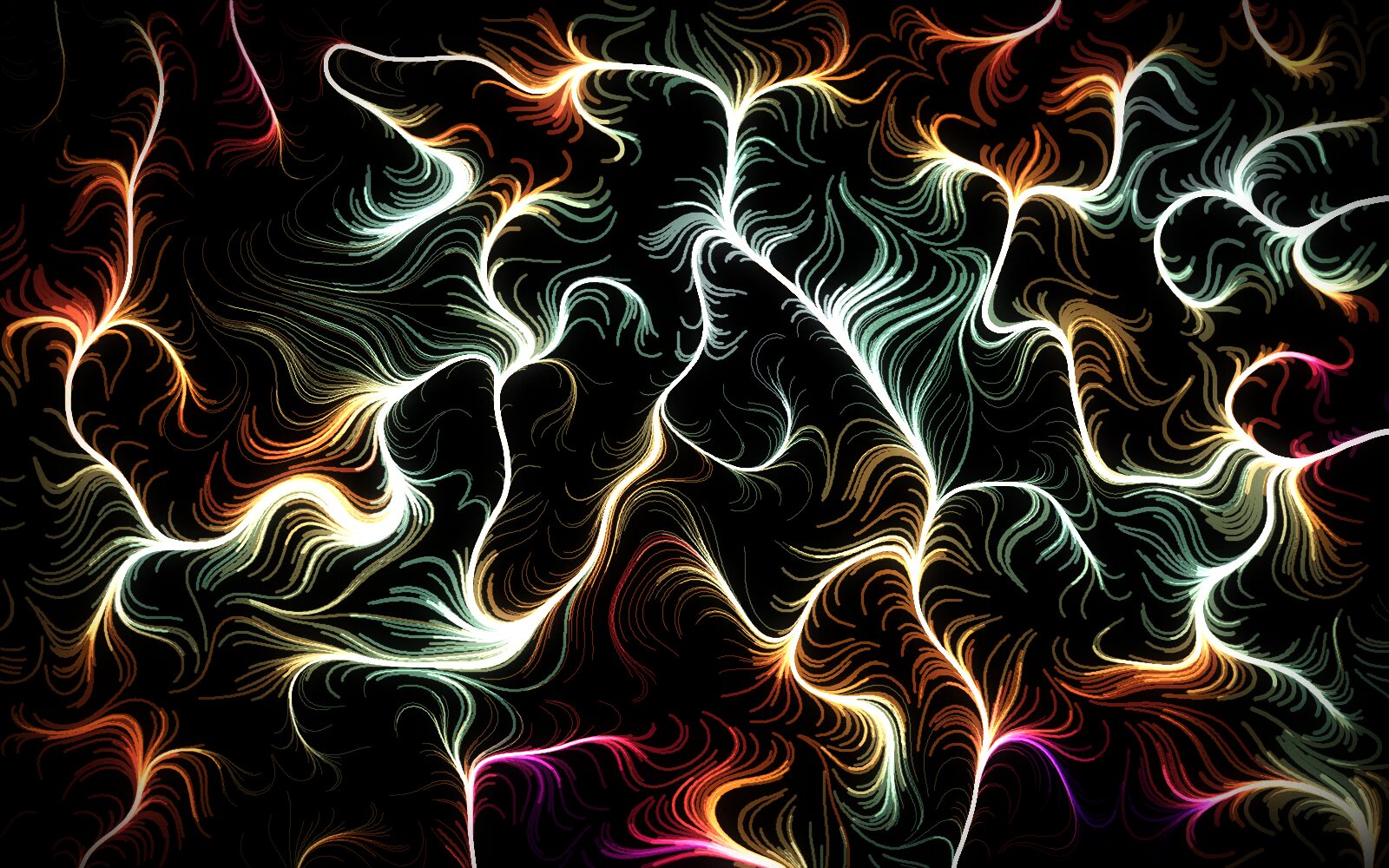
Dense electric filaments of orange and white curling across a black ground

Flow Field 2026

Pigment print. Particles integrated through a smoothed noise field and stroked as additive layers — no 3D library, no shaders, arithmetic and a drawing routine.

Two projections filling a workshop wall above a row of computers

blitbomb, installed 2013

Two projectors edge-blended across a workshop wall at Hacker Dojo. Documentation photograph.

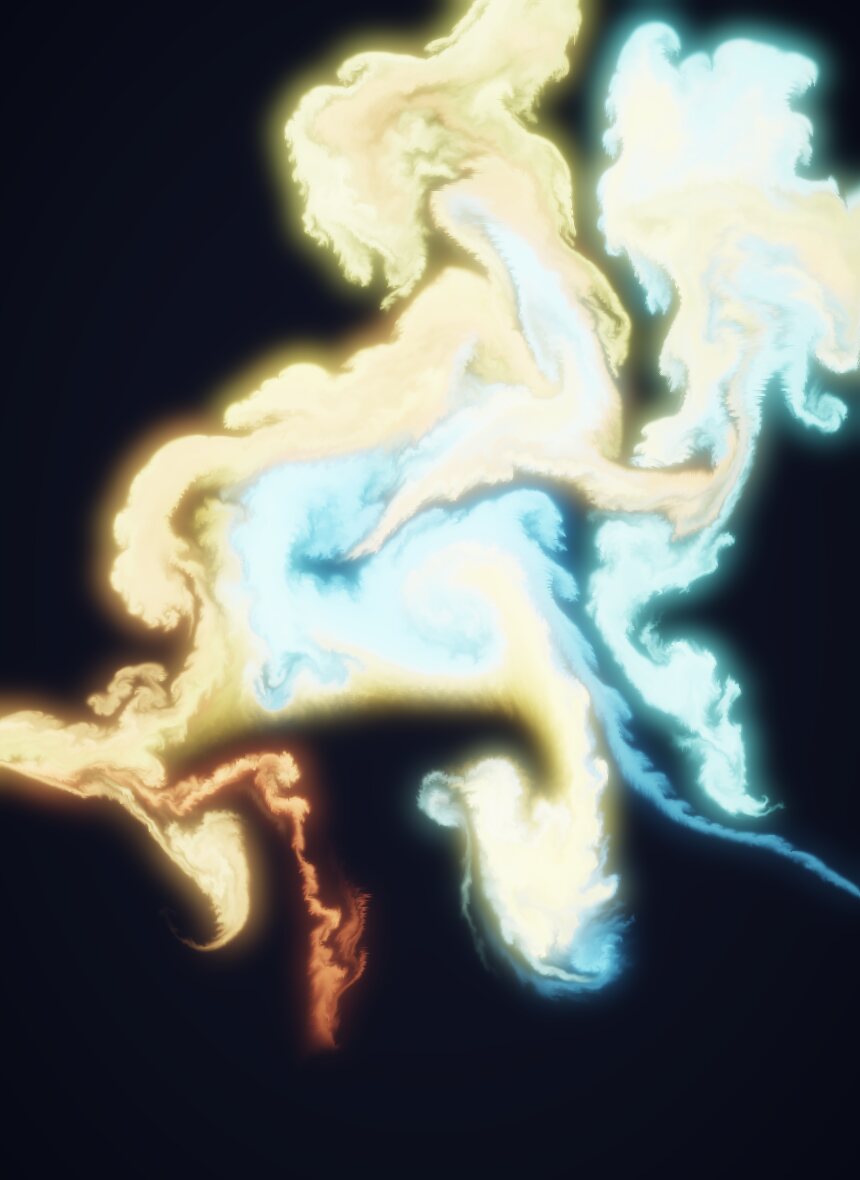
Ochre and cyan fluid forms twisting against a black ground

Fluid 2026

Pigment print. A stable-fluids solver run as a picture rather than a simulation.

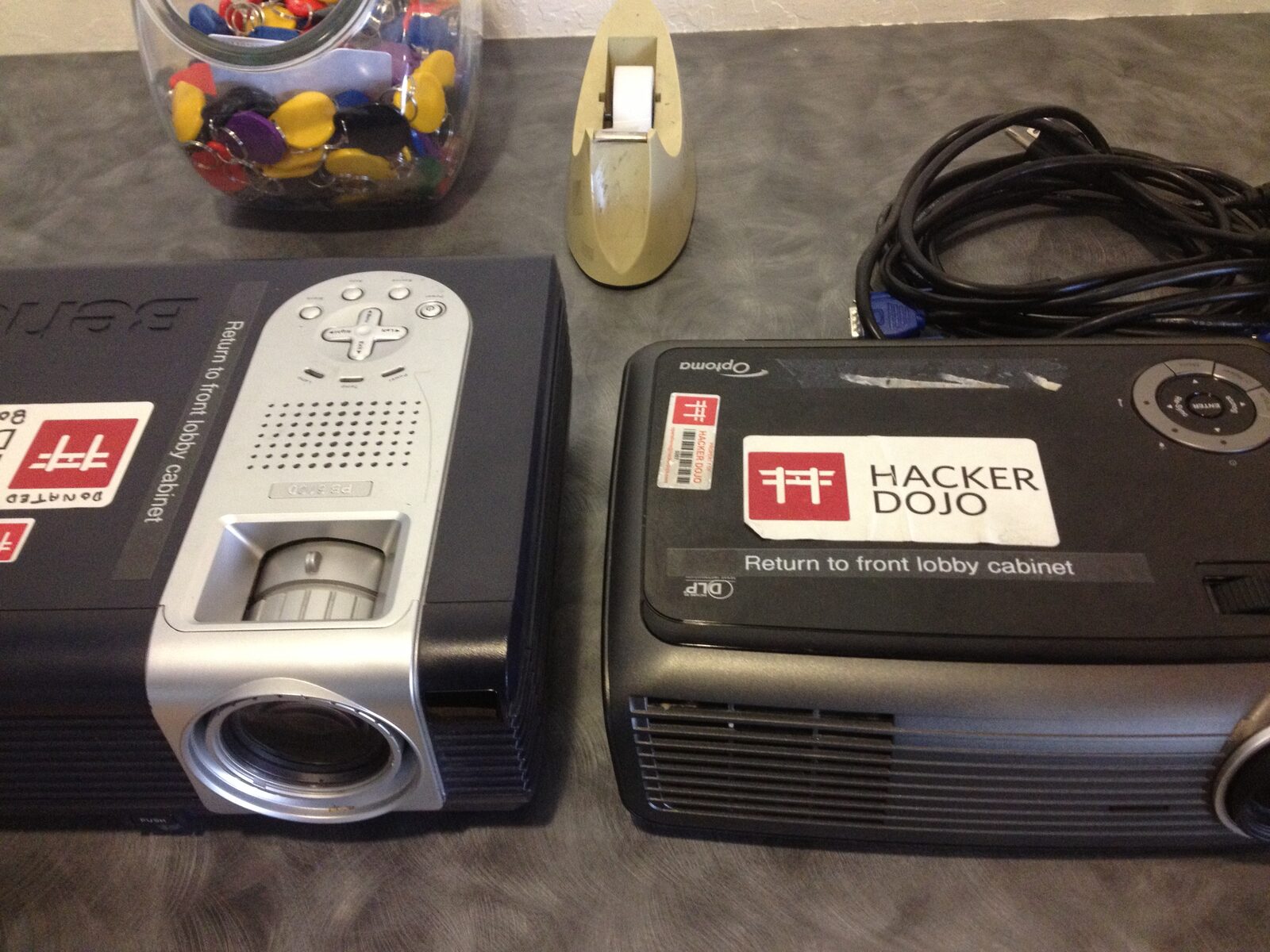
Two secondhand projectors on a workshop floor beside coiled cables

The apparatus 2013

The whole rig. Two borrowed projectors and a laptop — which is what it took to see the work once.

Thirteen years

Projects begun, per year.

Counted from repository creation dates — a crude measure, but an honest one, and not one I can quietly reshape after the fact.

201316
201414
20156
20168
20174
20182
20190
20204
20211
20226
20232
20247
20256
2026167

The bar at the bottom is the show. Everything above it is why that bar needs explaining.

The room

A model of the container, to scale.

Every dimension in the plan is real: a 20′ container measures 232 × 92 × 94 inches inside, and the works are placed at the heights they will actually hang. Drag to orbit, scroll to zoom, or walk the corridor from the door.

Interactive plan Open full screen →

Visit

Hayes Valley Art Works, San Francisco.

Dates

To be confirmedwith the gallery

Hours

To be confirmedfour hours daily, attended

Admission

Freethe artist is in the room

Power

Off-gridthe whole show runs on one battery